
Lemonaid HRT Review: Is It Legit, and Is It Right for You?
This Lemonaid HRT review finds that Lemonaid is a legitimate online option for menopause hot flashes — but a narrow one.Lemonaid lists $85 a month (a 90‑day supply), treats women ages 45–59 whose periods stopped 1–5 years ago, and prescribes a compounded estrogen cream (not FDA-approved) plus FDA-approved progesterone. It’s the wrong fit for perimenopause, insurance, or FDA-approved patches.
Editorial research by The HRT Index team. Educational only — not medical advice, and not medically reviewed by a clinician. Last verified: .
Disclosure: The HRT Index may earn a commission if you start care through some of the provider links on this page. That never changes our verdict. We review Lemonaid here because women search for it — not because it pays us. It doesn’t. Read our full disclosure.
That’s the bottom line. Now here’s the fuller picture — including the part almost every other Lemonaid review skips, because it’s the kind of thing that matters a lot when you’re about to hand a company your health history and your card number. (It involves a bankruptcy anda privacy lawsuit. We’ll get there.) First, the facts you came for.
The HRT Index is the independent decision resource for online menopause and HRT care — comparing telehealth providers on clinical legitimacy, care quality, medication fit, price transparency, and access, with every claim verified and dated, so women can choose the path that fits their situation before their first consult.
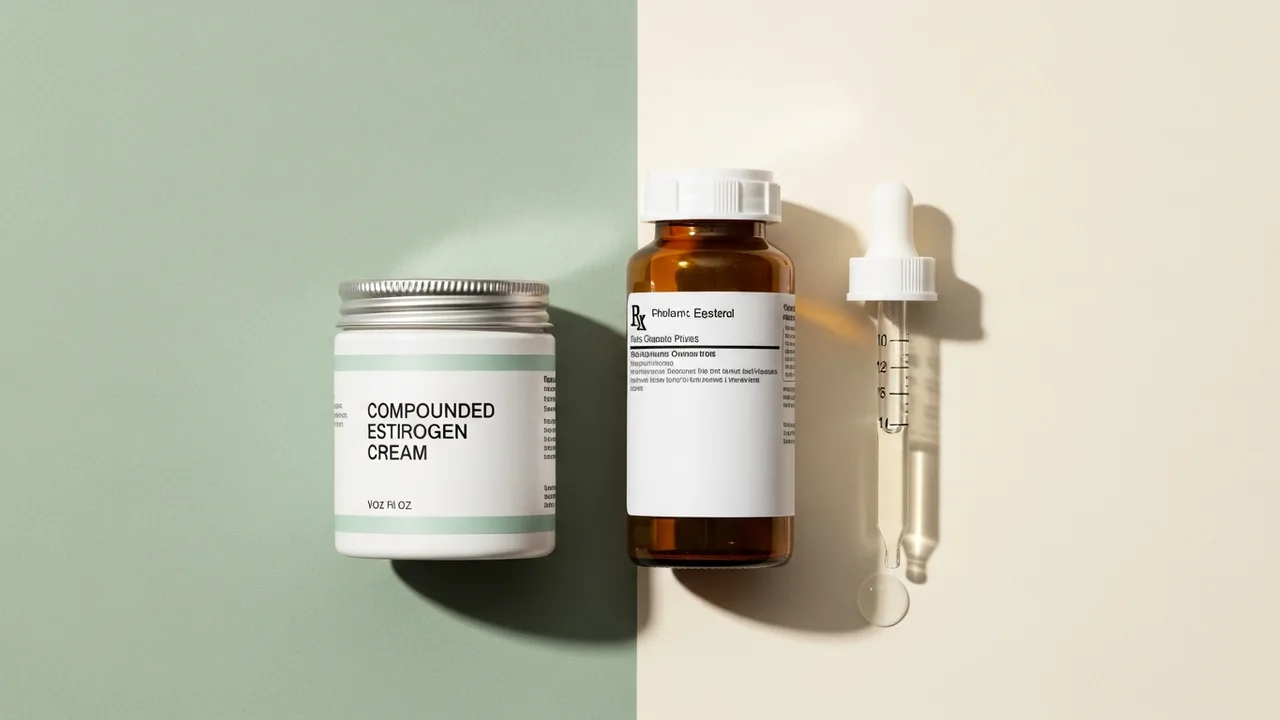
Lemonaid HRT Fit & Friction Matrix
Here’s everything that decides whether Lemonaid works for you, in one place, with what we could verify versus what you’ll want to confirm at checkout. Every price, age, and medication fact below comes from Lemonaid’s own hot-flashes page.
| What you’re checking | The answer | Verified? |
|---|---|---|
| Is it legit? | Yes — a real national online doctor’s office, operating since 2013 | Verified |
| What it treats | Menopause hot flashes and vaginal dryness/pain | Verified |
| Published price | $85/month, shipped as a 90-day supply | Verified |
| Who it’s for | Menopausal women ages 45–59, periods stopped 1–5 years ago | Verified |
| Hot-flash medication | Compounded estriol/estradiol estrogen cream + oral micronized progesterone (Prometrium) | Verified |
| Vaginal medication | Compounded vaginal estradiol cream | Verified |
| FDA-approved? | The progesterone is FDA-approved; the estrogen creams are compounded (not FDA-approved) | Verified |
| Exact billing (monthly vs per-90-days) | Not shown on the public page | Confirm at checkout |
| Takes insurance for HRT? | Not stated | Confirm at checkout |
| Pharmacy that fills your cream | Says “U.S. pharmacy”; not named publicly | Confirm at checkout |
| Refunds after you pay | Refund text (via BBB) says many fees are non-refundable | Read before paying |
| Biggest strength | Dead-simple pricing and home delivery | Verified |
| Biggest limitation | Narrow fit; compounded-estrogen route; not for perimenopause or FDA-approved shoppers | Verified |
Lemonaid HRT is probably a fit if you…
- Are 45–59 and clearly in menopause
- Had your last period 1–5 years ago (not still bleeding, even a little)
- Mostly need help with hot flashes, with or without vaginal dryness
- Are paying cash and want one clear price
- Are okay with a compounded estrogen cream once you understand what that means (we explain it below)
Lemonaid HRT is probably not a fit if you…
- Are still getting periods (Lemonaid can’t treat you — even if they’re irregular)
- Want an FDA-approved estradiol patch, pill, gel, or spray
- Are under 45 or 60+
- Need to use insurance
- Have a red-flag health history (we list Lemonaid’s own “see someone in person” list below)
If those “probably a fit” boxes match you: you can start Lemonaid’s hot-flash consult and check eligibility on Lemonaid’s site— just confirm your checkout total and cancellation terms first (we show you exactly what to check below).
Not sure, or you landed in the “not a fit” column? Don’t force it. Get matched to the right option in a couple of minutes with The HRT Index’s Find My HRT Path tool.
The right online HRT provider isn’t the same for every woman — it depends on your symptoms, what you have tried so far, your age, your state and your health history. Some situations belong with an in-person clinician first. Because a general answer can’t resolve those for you, use Find My HRT Pathto match your situation to the right provider — and to flag when online care isn’t the right starting point — before your first consult.
What does Lemonaid actually prescribe for menopause?
For hot flashes, Lemonaid says it typically prescribes two things: a compounded estriol/estradiol cream you rub on your skin, plus an oral micronized progesterone pill (brand name Prometrium). For vaginal dryness, burning, or pain during sex, it prescribes a compounded vaginal estradiol cream.That’s the whole menopause menu — two symptom paths, three medications.
Let’s make the words plain, because this is where the real decision lives.
- Estrogen is the hormone that drops in menopause and drives hot flashes, night sweats, and vaginal dryness.
- Estradiol and estriol are two forms of estrogen. Lemonaid’s skin cream uses both.
- Systemic treatment (like the skin cream) works through your whole body — that’s what calms hot flashes. Local treatment (like the vaginal cream) works right where you apply it — that’s for vaginal symptoms.
- Progesterone is a second hormone. If you still have your uterus and you take estrogen, you generally need progesterone too. It protects the lining of your uterus. Skipping it raises the risk of a dangerous thickening of that lining. Lemonaid’s progesterone, Prometrium, is FDA-approved.
Here’s the detail that matters most — and that a lot of quick reviews gloss right over: Lemonaid’s estrogen for hot flashes is a compounded cream. It is not an FDA-approved patch or pill. If you skim other write-ups, it’s easy to walk away thinking Lemonaid hands out standard, off-the-shelf HRT. It doesn’t. To Lemonaid’s credit, it says“compounded” plainly on its own site. We just want to make sure that word doesn’t get lost between the price and the “add to cart,” because it leads straight to the single most important question on this page.
Is Lemonaid’s HRT FDA-approved or compounded?
Lemonaid’s progesterone pill (Prometrium) is FDA-approved. Its estrogen — both the hot-flash skin cream and the vaginal cream — is compounded, meaning it’s mixed for you by a compounding pharmacy and has not gone through the FDA’s approval process. Compounded hormones are legal and can be a reasonable choice in specific situations, but they are not the same as FDA-approved products, and no major medical group treats them as automatically equal.
What “compounded” really means (and what it doesn’t)
An FDA-approved medication has been tested for safety and how well it works, made in batches under federal oversight, and comes with a standard label. Think estradiol patches, gels, sprays, and pills from a regular pharmacy.
A compounded medicationis custom-mixed for one patient. It can be genuinely useful — for example, if you’re allergic to an ingredient in the standard product, or you need a dose or form no manufacturer makes. The National Academies of Sciences, Engineering, and Medicine says exactly that: compounded hormones should be restricted to those specific situations, not used as the default. Here’s the part worth sitting with:
- The FDA says compounded “bioidentical” hormone products are not FDA-approved, and it does not have evidence they’re safer or more effective than FDA-approved hormone therapy.
- The FDA also says there is no FDA-approved drug that contains estriol — and estriol is one of the two estrogens in Lemonaid’s hot-flash cream.
- Major medical groups — the American College of Obstetricians and Gynecologists (ACOG), The Menopause Society, and the Endocrine Society — all land in the same place: when an FDA-approved option exists, use it first. ACOG puts it plainly: compounded menopausal hormone therapy should not be prescribed routinely when FDA-approved formulations exist.
We’re not here to scare you off compounded hormones. Plenty of women use them, often happily, and a good clinician can prescribe them responsibly. We’re here so you know what you’re choosing — because “personalized cream” soundspremium, and it’s easy to assume that means “better” or “more natural.” The evidence doesn’t support that assumption, and we won’t pretend it does.
Our one honest knock on Lemonaid — and who it should send elsewhere
Every provider has a catch. Here’s Lemonaid’s, straight:
Lemonaid does not offer FDA-approved systemic estrogen — its hot-flash estrogen is a compounded cream. If a tested, standardized, FDA-approved patch or pill is your priority, Lemonaid is the wrong pick, and Winona or Midi is the better path (both prescribe FDA-approved estradiol). But because Lemonaid keeps it deliberately simple — one cream, one progesterone pill, one flat $85 price — it’s one of the easiest online options to understand and budget, ifyou’re genuinely fine with the compounded route.
So if the compounded piece is a dealbreaker for you, that’s a completely valid line to draw. Don’t settle. Go see who does FDA-approved right.
Want an FDA-approved patch or pill instead of a compounded cream? Check each provider directly for medication options; the quiz suggests cash-pay online care based on your answers. → Find your online-care starting point
Is Lemonaid legit? The part other reviews won’t tell you
Yes, Lemonaid is a legitimate, licensed online doctor’s office — but its ownership just changed hands in a bankruptcy, and it recently settled a lawsuit over how its website handled patients’ health data. If you care who’s holding your menopause information, you should know both.None of the older Lemonaid reviews mention either one. We think they’re the most important trust facts on the page.
Who owns Lemonaid now?
Here’s the timeline we verified, in order:
| When | What happened |
|---|---|
| 2013 | Lemonaid Health founded as a telehealth + online pharmacy company |
| 2021 | DNA-testing company 23andMe buys Lemonaid for ~$400 million |
| 2023 | 23andMe suffers a data breach affecting roughly 6.9 million users |
| March 2025 | 23andMe files for Chapter 11 bankruptcy |
| Sept 2025 | Bambu Ventures and Innova agree to acquire Lemonaid for $10 million — a steep markdown from the ~$400 million 23andMe paid — through the bankruptcy |
| Now | Lemonaid operates as an independent company under that new, much smaller ownership |
So, in plain terms: Lemonaid is still open and still taking patients— this isn’t a “they shut down” warning. But it’s under brand-new owners and far smaller than it was under 23andMe. When ownership changes, prices, policies, and service can shift — so treat anything you read (including this page) as a snapshot, and confirm the current terms yourself.
Is your health data safe with Lemonaid?
This is the fact we most want you to have, because it’s about Lemonaid’s own website. In 2025, Lemonaid agreed to a $3.25 million settlementto resolve a class-action lawsuit that alleged its website used tracking pixels — small bits of marketing code — that shared users’ health information (the conditions people were researching, the medications they viewed, and identifiers like IP addresses) with third parties such as Facebook and Google, without consent. The settlement covers people who visited lemonaidhealth.com between June 2019 and July 2025, and it received preliminary court approval in October 2025.
Important, and fair to Lemonaid: Lemonaid denies any wrongdoing, and no court has found that it broke any law. A settlement is a compromise to end a case, not an admission.
What this means for you: it does not mean Lemonaid is unsafe to use today. It doesmean you should read Lemonaid’s current privacy and consumer-health-data policies before you sign up, and go in knowing that health-data handling is an area where this company has already faced — and settled — a legal challenge. Handing over menopause details earns that two-minute read.
To be fair on the other side of the ledger: Lemonaid keeps a LegitScript certification (a credential that vets legitimate online pharmacies), and it does publish a consumer-health-data privacy policy. Both are good signs. We just want you looking with open eyes, not squinting past the fine print.
Prefer a provider that isn’t mid-ownership-change? Match your situation to a better-fit option in a couple of minutes. → Find My HRT Path
How much does Lemonaid HRT cost?
Lemonaid lists its menopause hot-flashes treatment at $85 a month, shipped as a 90-day supply at a time, with free delivery in about 2–3 business days.That flat number is the main reason women consider it — it’s refreshingly clear. Just confirm the exact charge and timing before you pay, since a couple of details aren’t spelled out on the public page.
| Cost item | What we verified |
|---|---|
| Monthly price | $85/month (published) |
| How it ships | 90-day supply at a time |
| Delivery | Free, listed at 2–3 business days |
| Dose adjustments | Lemonaid says messaging the medical team for medicine adjustments has no extra charge |
| Billed monthly, or once per 90-day shipment? | Not shown — confirm at checkout |
| Taxes / extra fees | Not listed — confirm at checkout |
| Insurance | Not stated for HRT — confirm at checkout |
| When the next charge hits | Not listed — confirm at checkout |
| Refunds after you pay | See the cancellation section below — read this before paying |
Here’s the honest framing: $85 a month is a genuinely clear price — but price is only one of five things that matter. A cheap plan that prescribes the wrong medication for your situation isn’t a bargain. That’s why we score every provider on five pillars (clinical legitimacy, care quality, medication fit, price transparency, and access), not just the number on the pricing page. Lemonaid wins on price transparency. Whether it wins on medication fit depends entirely on you.
Who should not use Lemonaid for HRT?
Lemonaid itself tells you to see a doctor or nurse practitioner in person — not to use its service — if certain things apply to you. This isn’t fine print; it’s a safety list, and it disqualifies a lot of women. If any of these fit, Lemonaid is not your starting point, and forcing it would be a mistake.
Per Lemonaid’s own hot-flashes page, see someone in person for HRT if you:
- Are under 45 or 60 or older
- Are pregnant or breastfeeding
- Have had a period in the last 12 months (still bleeding = they can’t treat you)
- Have unexplained vaginal bleeding
- Have a history of breast, uterine, or endometrial cancer — or any current cancer or cancer testing
- Have had a stroke, heart disease, or blood-vessel disease
- Have a history of blood clots (DVT/PE), a clotting disorder, or heart valve problems that could raise clot risk
- Get migraines with aura (visual changes before the headache)
- Have liver, kidney, or thyroid problems, or high triglycerides
- Have had jaundice caused by estrogen or by pregnancy, or have porphyria
- Have HIV
- Went through menopause before 40 (primary ovarian insufficiency)
The one that trips up the most searchers: if you’re still getting periods — even irregular ones — Lemonaid says it can’t treat you. That rules out most women in perimenopause (the years beforeyour periods fully stop, when symptoms often hit hardest). If that’s you, you’re not out of luck — you just need a provider built for perimenopause.
Still getting periods, or see yourself on the red-flag list? You have real options. Winona, Midi, and Hers all treat perimenopause; some situations belong with an in-person clinician first. → Find the right starting point
What do real Lemonaid reviews say?
Lemonaid’s public reviews are genuinely mixed — and here’s the catch almost no one flags: almost none of them are about menopause HRT. Most reviews cover Lemonaid’s other services (weight-loss meds, mental health, men’s health). They’re useful for judging the service— speed, support, billing, cancellation — but they can’t tell you how the hormone treatment worked. We use them for exactly what they can prove, and nothing more.
What customers tend to like: fast sign-up, quick responses, on-time delivery, and helpful support. On Trustpilot, Lemonaid currently sits around 4.4 out of 5 across roughly 190 reviews — a score that has swung a lot over time, so treat it as a moving number. A couple of representative, verified snippets — both about general service, not hormones or health outcomes:
- A Trustpilot reviewer described the process as “quick and easy.”
- Another praised the helpful, immediate customer service.
What customers complain about — and this is the part to take seriously: surprise charges, getting billed after they thought they’d stopped, trouble canceling, and prices higher than a local pharmacy. Lemonaid is not BBB-accredited. Its BBB profile shows a small number of complaints (8 over three years) filed under product, sales/advertising, and service categories, with refund and cancellation the recurring themes in the complaint text. Tellingly, some reviewers have specifically mentioned the 23andMe bankruptcy and the news around compounded drugsas reasons they felt uneasy — which is exactly why we put the ownership and privacy sections above.
The takeaway: the medical side gets decent marks for convenience; the money side is where the complaints pile up. So before you enter a card number, do the two-minute check in the next section.
Reviews are opinions of individual customers, not proof of medical safety or results, and we don’t imply any outcome is typical. Ratings change; we recheck them monthly.
Can you cancel Lemonaid — and get a refund?
Don’t assume canceling is easy. Lemonaid’s refund language (as reproduced on its Better Business Bureau profile) states that fees and payments for memberships, auto-refills, visits, and product offerings are non-refundable and non-cancellable. Because that’s a real financial commitment, screenshot the price, the refill schedule, and the cancellation terms beforeyou pay — not after.
We confirmed that refund language exists via BBB’s reproduced policy text; we couldn’t pull every line of Lemonaid’s live policy pages during our review, so verify the current cancellation and refund terms directly at checkout.Here’s the two-minute protection habit we’d use ourselves:
Before you pay for any online HRT — Lemonaid or otherwise — capture:
- The exact amount charged today
- Whether the plan is monthly, quarterly, or auto-refill
- When the next charge hits, and when medication is prepared/shipped
- How to cancel (dashboard, message, phone, or email)
- Whether canceling stops the next shipment
- Whether a compounded medication is refundable once it’s been mixed for you (often it isn’t)
If any of that is fuzzy at checkout, that’s your signal to slow down. A provider with clear pause-and-cancel controls is worth more than a few saved dollars — for example, Winona says you can pause or cancel anytime, and Midi bills per visit rather than locking you into an auto-ship subscription.
Want a provider with clearer refill and cancellation controls? See how your options compare before you commit. → Compare online HRT providers
Lemonaid vs. Winona, Midi, Hers, and Sesame
Lemonaid should be judged by fit, not hype. It’s the simple, cash-pay, compounded-cream path for a narrow postmenopause hot-flash profile. For FDA-approved medication, insurance, perimenopause care, or more formats, other providers fit better.Here’s how the main online options stack up, with prices we verified in 2026 — always confirm current pricing on each provider’s site before you buy.
| Provider | Best for | Medication type | Starting price (2026, verify) | Insurance | Treats perimenopause? |
|---|---|---|---|---|---|
| Lemonaid | Simple cash-pay hot-flash care | Compounded estrogen cream + FDA-approved progesterone | $85/mo (90-day supply) | Not stated — verify | No (can’t treat if still bleeding) |
| Winona | Cash-pay; wants FDA-approved patch/tablets or compounded creams | Both — FDA-approved patch/tablets/progesterone capsules and compounded creams | Progesterone from $39/mo; combo cream $89/mo; estradiol patch $149/mo | No (HSA/FSA ok) | Yes |
| Midi | Insurance, complex history, live video visit | FDA-approved pills/patches/vaginal + non-hormonal options | ~$0–$50 typical with insurance; $250 first / $150 follow-up cash | Yes — most PPOs, all 50 states | Yes |
| Hers | Wants estradiol as a pill, patch, or vaginal cream + follow-up | Estradiol (pill, patch, vaginal cream) + progesterone | Patch kits reported from $134/mo | No | Yes (menopause & perimenopause specialty) |
| Sesame | Pick your own provider, use your local pharmacy | Provider’s choice, filled at your pharmacy | Menopause care from about $59/mo (confirm at checkout) | No (cash-pay) | Varies by provider |
Sources: each provider’s own site plus current reporting. Compounded creams — from Winona or anyone — are not FDA-approved; FDA-approved and compounded are labeled separately here on purpose.
A few honest notes:
- Winona is the strongest cash-pay alternative here for women leaving Lemonaid specifically because they want FDA-approved estradiol or perimenopause care. It does what Lemonaid doesn’t: Winona says its estradiol patches, tablets, and progesterone capsules are FDA-approved, while its creams are compounded — and it treats perimenopause. It also has a strong track record (around 4.7 out of 5 across thousands of Trustpilot reviews) and says you can pause or cancel anytime. If the compounded-cream issue is what pushed you away from Lemonaid, Winona lets you choose an FDA-approved patch, tablet, or capsule route.
- Midi is the pick if you want to use insurance or you have a more complicated health history and want a live video visitwith a menopause-trained clinician. It’s in-network with most PPO plans across all 50 states, with cash prices of $250 first visit / $150 follow-up (Midi). Heads-up: Midi can’t treat Medicaid/Medi-Cal patients (even cash-pay), and it bills like a clinic, so your cost depends on your plan.
- Hers launched a dedicated menopause and perimenopause specialty in 2025, offering estradiol (pill, patch, or vaginal cream) and progesterone through licensed providers. Worth knowing: FDA-approved estradiol patches saw some supply tightness in 2026, so check current availability. Read our full Hers review.
- Sesame fits if you’d rather choose your own doctor and fill the script at a pharmacy near you instead of a mail subscription. Read our full Sesame review.
Ready to see current pricing and availability for your best-fit provider? Get matched in a couple of minutes. → Find My HRT Path
How we reviewed Lemonaid: The HRT Index Verification Standard
We reviewed Lemonaid using The HRT Index Verification Standard — our documented process of reading every published price, separating FDA-approved from compounded, checking eligibility and access, triangulating third-party reputation, and flagging anything that still needs checkout confirmation.We score every provider on the same five pillars, in the same order, and we never invent numeric scores. Here’s how Lemonaid lands.
| Pillar | Lemonaid | Why |
|---|---|---|
| 1. Clinical legitimacy | Clear | Real, licensed national telehealth practice since 2013; LegitScript-certified; medical team of physicians, NPs, pharmacists, and nurses |
| 2. Care quality | Conditional | Async intake with possible video/phone by state; good for straightforward hot flashes, thin for complex cases; reviews aren’t menopause-specific |
| 3. Medication fit | Conditional / narrow | Two symptom paths only; compounded systemic + vaginal estrogen (not FDA-approved); FDA-approved progesterone; no patches, pills, gels, or testosterone |
| 4. Price transparency | Clear (a strength) | One published number — $85/mo, 90-day supply — that’s easy to evaluate |
| 5. Access | Conditional | National reach, but tight eligibility (ages 45–59, periods stopped 1–5 years), can’t treat perimenopause or several risk histories; insurance status unconfirmed |
The pattern is consistent: Lemonaid is legitimate and transparent, but its medication fit and access are narrow. For the right woman, that narrowness reads as simplicity. For everyone else, it reads as the wrong door.
The quick Lemonaid fit check
Not sure which column you’re in? Walk this in under a minute. It’s the same logic our matching tool uses — just faster and by hand.
Start here:
- Are you still getting periods (even irregular)?
→ Yes: Lemonaid can’t treat you. You likely want perimenopause-capable care — Winona, Midi, or Hers.
→ No:keep going. ↓ - Are you 45–59, with your last period 1–5 years ago?
→ No (under 45, 60+, or menopause before 40): start with an in-person clinician.
→ Yes:keep going. ↓ - Do you have any red flags (cancer history, clots, stroke/heart disease, migraine with aura, liver/kidney/thyroid issues, unexplained bleeding)?
→ Yes: in-person clinician first.
→ No:keep going. ↓ - Do you want FDA-approved estrogen (patch/pill/gel), or do you need insurance?
→ Yes to either: Lemonaid isn’t your best fit → Winona (FDA-approved, cash-pay) or Midi (FDA-approved, insurance).
→ No — I’m fine with a compounded cream, paying cash: Lemonaid is a reasonable fit. Confirm the checkout total and cancellation terms, then go.
If you walked all four steps and landed on “Lemonaid is a fit” — 45–59, no periods for 1–5 years, cash-pay, comfortable with a compounded cream, no red flags — you can check Lemonaid’s eligibility and start the hot-flash consult here.
Want it done for you, with your state and symptoms factored in? That’s exactly what our tool is for. → Get your personalized action plan
What we actually verified
We believe in showing our work. For this review, we personally checked:
- Lemonaid’s menopause HRT service exists and is live
- The $85/month price and 90-day supply (from Lemonaid’s own page)
- Eligibility: ages 45–59, periods stopped 1–5 years ago
- Hot-flash meds: compounded estriol/estradiol cream + oral micronized progesterone (Prometrium)
- Vaginal meds: compounded vaginal estradiol cream
- Lemonaid’s own “see someone in person” exclusion list
- The FDA’s position on compounded hormones and estriol
- ACOG / Menopause Society / Endocrine Society / National Academies guidance on compounded vs. FDA-approved
- The 23andMe bankruptcy and $10M Bambu Ventures acquisition
- The $3.25M Lemonaid pixel-tracking privacy settlement (Lemonaid denies wrongdoing; no court finding)
- Trustpilot and BBB reputation signals, and LegitScript certification
Still worth confirming yourself before you pay (these weren’t fully clear on the public pages): the exact checkout total, taxes, and billing cadence, insurance for HRT specifically, the pharmacy filling your compounded cream, your state’s video/phone rules, the next-charge timing, and the full cancellation/refund terms. When in doubt, screenshot it.
Lemonaid HRT review: FAQ
Is Lemonaid HRT legit?
Yes. Lemonaid is a real national online doctor’s office, licensed and operating since 2013, and LegitScript-certified. The bigger question is whether its narrow, compounded-estrogen menopause model fits your age, bleeding status, health history, and medication preference.
How much does Lemonaid HRT cost?
Lemonaid lists its hot-flashes treatment at $85 a month, shipped as a 90-day supply. Confirm your exact checkout total, billing timing, taxes, and refund terms before paying.
What does Lemonaid prescribe for hot flashes?
Lemonaid says it typically prescribes a compounded estriol/estradiol estrogen cream applied to the skin, plus an oral micronized progesterone pill (Prometrium) to protect the uterine lining.
Is Lemonaid’s estrogen FDA-approved?
No. Lemonaid’s hot-flash and vaginal estrogen are compounded creams, which are not FDA-approved. Its progesterone (Prometrium) is FDA-approved. The FDA says compounded bioidentical hormones are not proven safer or more effective than FDA-approved hormone therapy.
Does Lemonaid prescribe estrogen patches?
No — Lemonaid’s menopause route is a topical cream, not an FDA-approved estradiol patch. If you want a patch, look at Winona, Midi, or Hers.
Can Lemonaid treat perimenopause?
No. Lemonaid says that if you’re still having periods, even irregular ones, it cannot treat you. Perimenopausal women should consider a perimenopause-capable provider such as Winona, Midi, or Hers, or an in-person clinician.
Who should not use Lemonaid for HRT?
Lemonaid says to see someone in person if you’re under 45 or 60 or older, pregnant or breastfeeding, had a period in the last 12 months, have unexplained bleeding, or have a history of cancer, blood clots, stroke or heart disease, migraine with aura, or liver, kidney, or thyroid problems, among others.
Does Lemonaid take insurance for HRT?
Lemonaid’s public hot-flashes page does not clearly state insurance acceptance for HRT. Confirm at checkout or with support. If you want insurance-covered menopause care, Midi is in-network with most PPO plans across all 50 states.
Who owns Lemonaid now?
Lemonaid was owned by 23andMe, which filed for bankruptcy in 2025. In September 2025, Bambu Ventures and Innova agreed to acquire Lemonaid for $10 million, and it now operates as an independent company under that new ownership.
Is Lemonaid hard to cancel?
Possibly. Refund language on Lemonaid’s BBB profile states many fees and payments are non-refundable and non-cancellable, and billing and cancellation are the most common complaints. Screenshot the price, refill schedule, and cancellation terms before you pay.
Is Lemonaid better than Winona or Midi?
Only for the right person. Lemonaid may fit a cash-pay, postmenopausal woman comfortable with a compounded cream. If you want FDA-approved estradiol, insurance, or perimenopause care, Winona or Midi is the stronger fit.
The bottom line on Lemonaid HRT
Answer:Lemonaid is legit, simple, and honestly priced at $85 a month — and it’s genuinely useful for a specific woman: postmenopausal, 45–59, cash-paying, fine with a compounded estrogen cream, with no red-flag history. If that’s you, you now know exactly what you’re getting, what to confirm at checkout, and where to start.
But if you want FDA-approved medication, need insurance, or you’re still getting periods, Lemonaid isn’t your best move — and pretending otherwise would just cost you time and money. The good news is that the better-fit options are a couple of clicks away, and you don’t have to guess between them.
Still not sure which HRT path is right for you? Take our free Find My HRT Pathquiz — a few quick questions, and you’ll get a personalized action plan (including when to see someone in person) to bring into your first consult.
Still not sure which HRT program is right for you?
Take our free Find My HRT Path quiz. Answer a few questions about your symptoms, what you have tried, age, state, and health history, and we’ll suggest your best-fit cash-pay online service or an in-person next step.
Get your personalized HRT action plan →Free · independent · evidence-first.
Sources & last verified
Last verified: . We re-check pricing and policies monthly and medical/regulatory facts quarterly.
- Lemonaid Health — hot flashes / menopause HRT service page (price, eligibility, medications, exclusions), homepage and site footer (medical group structure, clinical team, LegitScript): lemonaidhealth.com
- U.S. Food & Drug Administration — menopause / hormone therapy and compounded “bioidentical” hormones (not FDA-approved; no FDA-approved estriol): fda.gov
- American College of Obstetricians and Gynecologists (ACOG) — Compounded Bioidentical Menopausal Hormone Therapy: acog.org
- National Academies of Sciences, Engineering, and Medicine — restricting non-FDA-approved compounded bioidentical hormones to specific circumstances: nationalacademies.org
- The Menopause Society and the Endocrine Society — positions on compounded bioidentical hormone therapy
- 23andMe bankruptcy and Lemonaid acquisition (Bambu Ventures / Innova, $10M, 2025): hlth.com; public bankruptcy reporting
- Lemonaid pixel-tracking privacy class-action settlement ($3.25M; Lemonaid denies wrongdoing): lemonaidpixelsettlement.com; hipaajournal.com
- Trustpilot — Lemonaid Health customer reviews profile: trustpilot.com/review/lemonaidhealth.com
- Better Business Bureau (BBB) — Lemonaid Health profile, complaints, and reproduced refund language: bbb.org
- Winona — hormone therapy pages and pricing (FDA-approved vs compounded): bywinona.com
- Midi Health — menopause, pricing, and insurance pages: joinmidi.com
- Hers — Menopause and Perimenopause Specialty launch: investors.hims.com; estradiol patch supply reporting: reuters.com
- Sesame — online menopause treatment service page: sesamecare.com
This article is for general information and is not medical advice. Hormone therapy decisions should be made with a licensed clinician who knows your history. The HRT Index is the independent menopause-HRT decision resource for women.
Your situation changes the answer
Find My HRT Path
The right online menopause care isn't the same for every woman. It depends on your symptoms, what you've already tried, your age, your state and your health history — and some situations belong with an in-person clinician first. Because a general answer can't resolve those for you, use The HRT Index's Find My HRT Path tool to match your answers to an online option that fits, and to flag when online care isn't the right starting point, before your first consult.
See My HRT Match